



By Sara Lopez
At Sol Academy in Kendall, we believe some of the strongest foundations for future academic success are built before children are asked to master formal academics.
That belief is deeply personal to me.
I founded Sol Academy 11 years ago while searching for the right school for my own two boys. I had already worked in several schools and had seen many different approaches to early education. There were strong programs and caring teachers, but I kept feeling that something important was missing.
For me, that missing piece was connection and social-emotional development.
I wanted my children to be in a school where they felt known, safe, understood, and supported. A place where creativity, outdoor exploration, and connection were seen not as extras, but as essential parts of learning.
That became the heart of Sol Academy.
Creativity Builds the Skills for Learning
Play is often treated as something children do after the “real learning” is finished. But in early childhood, play is the real learning.
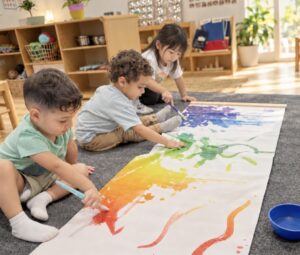
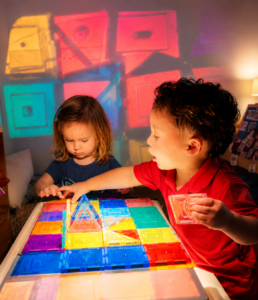
When children build with blocks, they are developing spatial awareness, planning, problem-solving, and early mathematical thinking. When they create stories, negotiate roles, or explain their ideas, they are building language, communication, imagination, and perspective-taking. When they play games with rules, they practice memory, attention, flexibility, impulse control, and cooperation. These are the same underlying skills children need later for reading, writing, mathematics, and classroom learning.
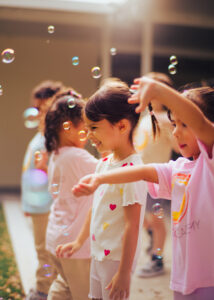
Outdoor Exploration Builds the Body & Brain
Outdoor play offers experiences that cannot be fully replicated indoors.
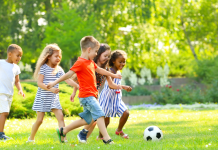
Running, climbing, balancing, jumping, carrying, digging, and navigating uneven surfaces help children develop strength, coordination, balance, and motor planning. These movements also support proprioception, the body’s awareness of where it is in space. Proprioceptive experiences help children understand how much force to use, how to move safely, and how to organize their bodies for learning.
A child who has opportunities to move, take appropriate risks, and challenge their body is also practicing decision-making and self-regulation. They learn to assess a situation, try something new, recover from a fall, and decide whether to try again. That is resilience in action.
Additionally, outdoor environments invite curiosity! Children observe patterns, ask questions, notice changes, and investigate the natural world. These experiences support the early scientific thinking that grows from wondering, observing, predicting, and testing ideas.
Connection Builds a Child’s Inner Voice
Children do not learn only from what adults teach. They learn from how adults respond to them.
When adults respond with patience, respect, and confidence in a child’s ability to grow, children begin to develop an inner voice that says, “I can try,” “I can ask for help,” and “I can work through this.”
This is why child-teacher interactions matter so much. A teacher who notices a child’s effort, helps them name an emotion, offers a calm boundary, or stays present during frustration is teaching far more than behavior in that moment. They are helping the child build a sense of safety, competence, and self-worth.
Supporting the Whole Family
Creativity, outdoor exploration, and connection are not skills that compete with academics. They make stronger academics possible.
At Sol Academy, our small class sizes allow teachers to truly know each child and build meaningful relationships. We provide outdoor play every day, along with play-based learning that encourages curiosity, creativity, language development, problem-solving, and independence for children ages 12 months-Kindergarten.
We also offer enrichment programs for homeschoolers, giving children ages 6-9 opportunities to participate in creative, hands-on learning experiences in a warm and social environment.
Of course we want children to become strong readers, writers, thinkers, and students. But we also want them to become confident, compassionate, creative people who can regulate their emotions, work with others, solve problems, and stay curious. Because the goal of education is not only to prepare children for the next grade. It is to give them the foundation for a lifetime of learning and a happier, more connected life.