




No one pushes your buttons like your siblings. I can honestly say I have never fought with anyone (significant others included) like I’ve fought with my sisters. Siblings have a special talent for finding the most sensitive spots and knowing exactly how to press them.

So if you’re anything like my parents, it can be very easy to find yourself getting sucked in when it comes to managing the relationship between your children.
You can almost hear it:
“Don’t hit your brother.”
“Just give it to her.”
“Okay, now it’s her turn.”
“Don’t scream at your brother.”
“Just STOP fighting.”
More than a parent, you inadvertently become a referee.
Suddenly, you’re right in the middle of the ring, trying to maintain your composure, negotiate arguments, manage everyone’s feelings, and repeating the same instructions over and over again while worrying about being fair.
And no matter how hard you try, one child always ends up saying, “You always take his/her side,” leaving you completely depleted.
When siblings fight, it’s usually because they’re competing for attention or connection either from you or from each other. Conflict is how they seek that connection, test boundaries, express frustration, and ultimately, learn how relationships work.
When we rush in to fix every disagreement, we unintentionally take away one of the most important skills they need to develop: learning how to navigate relationships.
This doesn’t mean ignoring conflict or allowing hurtful behavior. It means setting clear boundaries when necessary and resisting the urge to solve every problem for them. Instead of refereeing the fight, you become the steady presence in the room.
And when you’re no longer there to run the show, something interesting tends to happen: siblings begin to negotiate, repair, and figure out their relationship in their own way.
The goal isn’t to raise siblings who never fight, but to create an environment where they eventually learn how to work it out.
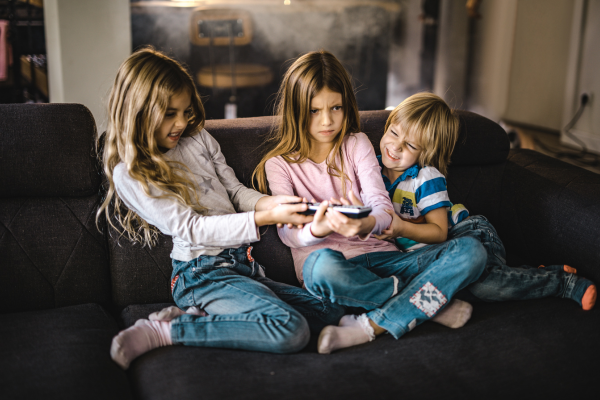
If you’re tired of getting drawn into every disagreement, try these three things instead:
1. Pause before jumping in
When fights break out, we tend to react immediately. But not every conflict needs an adult solution. If the disagreement isn’t escalating into physical harm, give your children a moment to try to figure it out themselves. That pause creates space for problem-solving.
2. Set the boundary, not the verdict
Your role is to protect safety, not decide who wins. Instead of solving the problem, focus on the limit, and that can sound a bit like this:
“I won’t allow hitting.”
“I hear two people who want the same toy.”
This keeps you from getting pulled into the argument but allows them to understand exactly where you stand.
3. Invite them to solve the issue together
Once things calm down, shift the responsibility back to them:
By encouraging them to problem-solve, you invite creativity and ownership. You might be surprised by what they come up with when given the space. Over time, this builds the skills they’ll use to navigate friendships, partnerships, and conflict in the real world.
“What could work for both of you?”
“How can we fix this?”
“What could we do next time this happens?”
Sibling fights can feel exhausting in the moment. But they’re also one of the earliest classrooms where children learn negotiation, empathy, and repair.
And sometimes, the most helpful thing a parent can do… is step out of the ring.