




Anyone who has been around a toddler, or should I say kids in general, knows they aren’t exactly known for their diplomacy or tact. Quite the contrary, they have an uncanny ability to say whatever comes to mind, with little concern for how it might land or who it might hurt.
You’re ugly.
I hate you.
You’re bad.
I don’t want you.

Whoa. Did he just say that?
That’s the strange thing about kids. They can say something in a moment of frustration, anger or complete toddler randomness, and five minutes later they’re asking for a snack or giving you a hug. Meanwhile, we’re still thinking about it three hours later.
Because somewhere between what they said and what we heard, something happened. “I don’t want you” becomes my child doesn’t love me when you’ve already spent the day wondering whether you’re doing enough. “I want Daddy” feels like she loves him more when you’ve been working late all week and feel guilty about the time you’ve missed. “You’re mean” quickly turns into I’m failing when you’ve been playing bad cop.
Acknowledging the Hurt Versus the Truth
The words may belong to our children but the story we attach to them is all us. Because when you’re packing lunches, finding the missing shoe, remembering the permission slip, negotiating bath time and asking someone to brush their teeth approximately 47 times, your emotional reserves may already be running low. So, when the tiny dictator you’ve spent the entire day caring for looks at you and says, “I hate you,” of course, it stings. But there’s a difference between acknowledging the hurt and turning it into a truth about your relationship with your child.
“I don’t want you” doesn’t necessarily mean I don’t love you. It might mean I wanted Daddy to put me to bed, I’m angry you said no or I have a big feeling and these are the only words I know to express it. Sometimes our reactions have less to do with the child standing in front of us and more to do with what we brought into the room, like our insecurities, exhaustion or expectations of ourselves, even experiences from our own childhood.
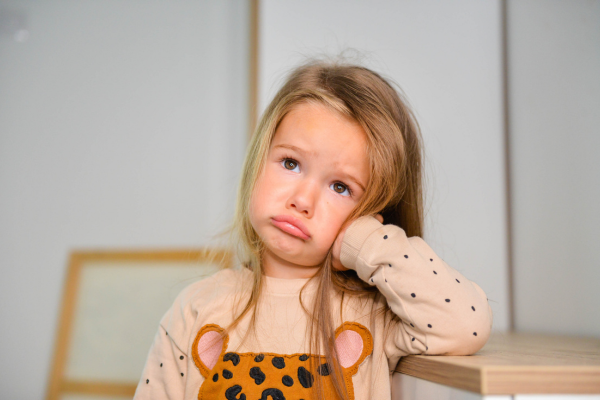
Their Words, Our Stories
That doesn’t mean we shouldn’t teach our children that words matter. We can set boundaries around hurtful language while recognizing that kids are still learning how to express big feelings with a limited emotional vocabulary.
We can also give ourselves permission to have a reaction. The goal isn’t to become so emotionally evolved that nothing our children say ever hurts us. It’s to notice the difference between their words and our story.
Children will get angry, they’ll prefer someone else sometimes, they’ll say no and they will most definitely say things badly. Eventually, they’ll have opinions about us we may not particularly enjoy hearing. We can’t control any of that, however, we can get curious about the stories we create in response.
So, the next time your toddler looks you squarely in the eye and announces that you are the worst mommy in the entire world because you had the audacity to say no to another cookie, hear the words, feel the burn, and remind yourself, this is just a moment. I don’t need to make it mean more than that.